
Title: Naked in the NowAuthor(s): marijke-mccandlesPublisher: O-Books (2024)ISBN: 978-1803415673

 Village Books
 Amazon
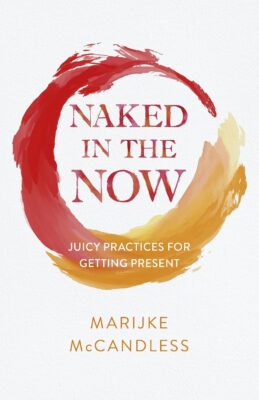
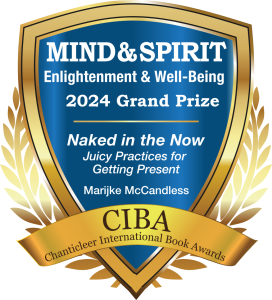 Naked in the Now: Juicy Practices for Getting Present by Marijke McCandless is a spiritual and psychological journey for restless minds to find authenticity, awareness, and how to be fully alive—an intimate quest and relational bridge between oneself and others.
Naked in the Now takes readers to landmarks of practice and reflection towards transcending the pressure of external achievements and cultivating instead present contentment within. Refusing the tonality of “fix yourself,” this guide invites one to rediscover their naked self, with several chapters acting as open letters to read and linger over.
The introductory chapters focus on basic mindfulness and ease, while the later ones expand their scope to cover relationships, communication, and intimacy. A blend of poetic and practical styles ushers readers towards personal discovery in a way that balances firm instruction against a gentle directing hand. What coalesces by the end is a manual that calls forth one’s intrinsic goodness and connection through self-acceptance, playfulness, and vulnerability.
The Buddhist idea of Dukkha (dissatisfaction) opens the journey, with McCandless referencing a nagging feeling of missing out on something despite being superficially affirmed in life.
Ascribing this disillusionment to a “conditioned mind,” McCandless infers the solution to be in resting in the present moment. Aesop’s fable North Wind and the Sun, illustrates this idea through the power of warmth (awareness) over force.
Naked in the Now goes on to explain mindfulness and meditation in an intrinsically playful manner: employing tactics of finding four-leaf clovers and watching rainbows as childhood memories, highlighting the real joy found in the process rather than the results.
Metaphors of meditation as a “mini vacation” and “intimacy with lover” complement the intrinsically playful philosophy with practices such as breath watching, golden light relaxation, and sensory awareness. Journaling, self-inquiry, and devotion-based prayer further prepare readers to dismantle harmful mental conditioning.
Further along, Naked in the Now takes a deeper turn–the inner striptease–guiding readers with suggestions on peeling off their social masks, roles, and ego identities.
Tools such as Tarot/I Ching offer a novel perspective on the self. The focus then shifts to relationships, with pink light meditation, Tibetan tonglen (inhaling suffering and exhaling love), and love-letter exercises all reinforcing the idea that healing involves both oneself and one’s connection with others.
Centering the interplay of communication and presence, practices such as reflective listening, gestures of a smile, sacred spaces, soul gazing, and mirror meditation all work to transform vulnerability into strength.
The final stop is reaching the stage of “getting naked,” to lay bare one’s real desires and fears without filters through a gentle, moment by moment unfolding.
This is a call to meet with a raw and vulnerable being, but also the most authentic and beautiful version of self.
Each chapter cries out the motto of “Ease Over Effort”: real transformation dawns in coming home to oneself and surrendering, not in a tireless hunt for self-improvement.
A tranquil sitting with inner restlessness becomes the goal, instead of forceful control of that chaos. Corresponding themes show in Naked in the Now’s advocacy for childhood wonder over stifling adulthood. This reminds us of how mindfulness isn’t necessarily a boring or rigid practice, but can be a joyful game. Conversely, the metaphor of the inner striptease emphasizes the significance of sober authenticity and vulnerability, with oneself and others.
This book caters to readers who aspire to slow down from an over-scheduled life.
It’s a soft entry point to meditation and mindfulness, a compassionate alternative to traditional and often tedious self-help narratives. Transcending aloof philosophy, this work is an experience-based, practice-oriented guide. It invites readers to learn the ways to a life of ease, love, and wonder.
“Learning how to be still, to really be still and let life happen—that stillness becomes a radiance,” this quote by Morgan Freeman captures the essence of Naked in the Now. A guide that asks not for harsh effort but for an open-hearted willingness to nestle in inner moments and accept, without judgments, one’s emotions and desires.

Leave a Reply