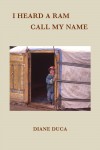
Set in rural Mongolia, Diane Duca’s I Heard a Ram Call My Name sets up a moral standoff between predators and prey by detailing a single hunting expedition for the endangered argali sheep.
Interweaving human and animal perspectives, this meticulous and detail-rich novel paints a comprehensive portrait of an argali hunt. By following the story of the expedition from beginning to end, it explores every facet of the process from its shady organization to the devastating and lasting consequences for the hunted animals.
At the novel’s beginning it is centered around a beleaguered German business ambassador working in Mongolia named Helmut. He is desperately trying to make preparations for his company’s executives upcoming hunting trip. Helmut has personal moral misgivings about the practice of argali hunting, but feels compelled by loyalty to his company to complete the task assigned to him. However, in spite of his desire to organize the expedition and wash his hands of the whole business as quickly as possible, the planning is not going smoothly.
Only exacerbating Helmut’s conflicted feelings is his flirtatious friendship with a local Mongolian woman named Sheema. An independent artist with a personal history of caring for and interacting with the argali, Sheema feels a strong connection with the sheep and is passionate about their protection from hunters. For Helmut, she serves as a living reminder of the toll organizing the expedition is taking on his conscience, for the reader, of the cultural significance the argali hold for the Mongolian people.
Helmut’s story is paralleled by that of a wild argali ram named Aries. By following Aries’ life through adolescence and personal conflicts to eventual romance, Duca establishes the argali as people in their own right. They have personalities and relationships that, while somewhat anthropomorphized, are often more engaging than those of the human characters. Although the dialogue between the sheep sometimes feels unnecessary, the story of Aries and his paramour Solongo is compelling, and ultimately culminates in the novel’s most powerful moments.
I Heard A Ram Call My Name is not a perfect novel. The dialogue is awkward at times, and the sudden switch to a completely different cast of human characters halfway through the novel may make it more difficult for some to stay emotionally engaged by the story.
However, Duca’s extensive research and knowledge on the subject of the argali and the controversy surrounding them make this an enlightening commentary on the issue, and a persuasive argument for the protection of the argali.

 Seventeen-year-old Brittany Morgan’s infant daughter was taken from her car—an apparent kidnapping. Brittany’s young mind is quaking in attacks of hope, fear, guilt and desperation. Why would anyone take little Ivy from her? Where can Ivy be by now? Is she being held for ransom? Is she still alive?